

The UK skills gap has been declared a crisis so many times that some employers have stopped treating it as an emergency. That is a mistake. According to ManpowerGroup’s 2026 Talent Shortage Survey, 72 percent of UK employers still report difficulty finding the skilled talent they need, a figure that has remained stubbornly high for a decade and has only declined marginally from 76 percent the previous year. Meanwhile, the British Chambers of Commerce found that 54 percent of UK businesses are now using AI in some form, yet nearly three in four of those same businesses cannot find the people with the capability to use it effectively.
This is not simply a volume problem. UK vacancy numbers have softened in 2026, and unemployment has crept up to around five percent. There is no shortage of people looking for work. The challenge is a structural mismatch between the skills employers need and the skills available in the domestic labour market and it is getting sharper, not softer, as technology, regulatory change, and globalisation continue to reshape what roles actually require.
For UK businesses, understanding the shape of this skills gap, which sectors it hits hardest, what is causing it, and which strategies are genuinely closing it is no longer optional. It is a fundamental part of competitive workforce planning. This guide covers all of it.
The Shape of the UK Skills Gap in 2026: Not One Problem but Several

The term ‘skills gap’ can obscure as much as it reveals. In 2026, the UK is not dealing with a single uniform shortage, it is dealing with several distinct and overlapping ones, each with its own causes and its own set of practical solutions.
The Technical and Digital Skills Shortage
Technology and digital services continue to experience among the most acute shortages of any sector in the UK. Cybersecurity, software engineering, data science, cloud infrastructure, and increasingly, AI literacy are all areas where demand from employers consistently outstrips the supply of qualified candidates. For the first time in 2026, AI literacy has been identified by ManpowerGroup as the single skill organisations are having the most difficulty finding. This is not about replacing people with AI. Only 10 percent of employers are using AI and automation to reduce headcount. It is about finding people who can work effectively alongside AI tools and that combination of technical literacy, adaptability, and critical thinking is genuinely scarce.
The Construction and Engineering Shortage
Construction and engineering face a different kind of crisis, one driven by workforce demographics as much as by skills. UK construction employment fell to its lowest level in almost 25 years in 2025, with approximately 2.05 million workers, more than 10 percent below pre-pandemic levels. The Construction Industry Training Board estimates the sector will need around 47,860 additional workers annually between 2025 and 2029 to meet baseline demand. Many experienced tradespeople are approaching retirement age, and the pipeline of younger workers entering the sector has not kept pace. The result is a structural shortage that is actively slowing housing and infrastructure delivery across the country.
The AI and Emerging Technology Literacy Gap
Perhaps the most underappreciated dimension of the UK’s skills challenge is the breadth of the AI literacy gap across non-technical roles. Business leaders, marketing teams, finance professionals, project managers, and HR functions are all expected to make decisions informed by data and augmented by AI tools, yet most organisations have not invested in developing this capability systematically. The British Chambers of Commerce found that businesses are overwhelmingly focused on adding new technical tools, but the deeper question of how people approach their work, how they identify opportunities, and how they adapt to AI-augmented environments is almost never addressed by in-house training.
Why Traditional Hiring Strategies Are Failing UK Employers

For most of the past decade, the standard response to a skills shortage has been straightforward: advertise the role, review CVs, and hire the best available candidate. In 2026, this approach is producing increasingly poor results, not because the fundamentals of hiring have changed, but because the talent landscape has.
The two-tier nature of the current UK labour market means that junior and generalist roles attract high volumes of applicants, which can create a misleading sense that hiring is easy. For specialist, technical, and senior roles, exactly the positions where skills gaps are most acute, the picture is reversed. Competition for capable candidates is intense, timelines are long, and candidates in high-demand specialisms are often in multiple processes simultaneously. The average time to hire in the UK is currently around eight weeks, but for specialist roles this regularly extends to three months or more.
Compounding this is a widening gap between employer expectations and candidate reality. 58 percent of UK employers have seen an increase in role complexity over recent years, with more demand for digital and technical capabilities across what were previously non-technical positions. CVs and traditional interview processes are poorly equipped to assess whether a candidate can actually perform in these more complex environments. A well-written CV and a confident interview are not reliable proxies for on-the-job capability, particularly for roles involving AI tools, data interpretation, or cross-functional technical skills.
The result is a hiring process that filters out a disproportionate number of genuinely capable candidates while selecting for presentation skills and familiarity with the interview format. It is not a system designed for the talent market of 2026.
The Strategies That Are Actually Working
Skills-Based Hiring
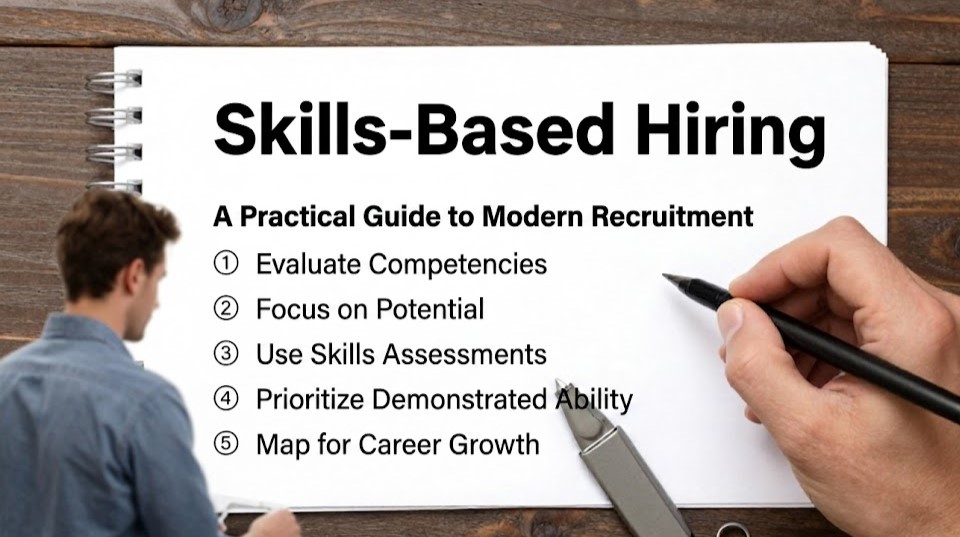
The most significant shift in UK recruitment strategy in 2026 is the move toward skills-based hiring, evaluating candidates against specific, demonstrable competencies rather than against traditional proxies like degree classification, previous job titles, or years of experience. According to Totaljobs, 43 percent of UK recruiters now cite skills-based hiring as their top priority for the year, driven precisely by the recognition that the old model is producing mismatches.
In practice, skills-based hiring means building structured assessments, scenario-based tasks, technical exercises, competency interviews, into the selection process early enough to meaningfully differentiate candidates. It requires clear job briefs that articulate what the role actually requires in terms of capability, not just what credentials signal it. And it requires hiring managers who understand the difference between a candidate who can perform and a candidate who presents well. Done properly, skills-based hiring widens the effective talent pool significantly, capturing capable candidates who would have been filtered out by a credentials-first approach.
International Talent Pipelines

For sectors where domestic supply is structurally insufficient and construction, engineering, technology, healthcare, and hospitality all qualify, international recruitment is not a last resort but a strategic necessity. The UK’s Skilled Worker visa route, despite its tightened eligibility criteria in 2026, continues to provide a viable pathway for employers to access global talent pools where domestic shortages are severe. Employers with a sponsor licence can now recruit compliantly from markets including Nigeria, India, the Philippines, and across Africa markets where the skills the UK needs are available and where interest in UK employment opportunities is genuinely high.
The practical barriers to international recruitment compliance complexity, documentation requirements, cost, and the time involved in building international sourcing relationships are real. But they are surmountable with the right recruitment partner. For businesses in skills-scarce sectors, the cost of managing international hiring complexity is almost always lower than the sustained cost of operating with unfilled roles.
Flexible Work as a Competitive Differentiator

Flexibility has moved from a candidate preference to a structural requirement for competitive hiring in 2026. 72 percent of UK workers say they would consider leaving a job that does not offer flexible working, and 26 percent of candidates in a recent HireRight survey withdrew from hiring processes when remote working was not offered. For employers in skills-scarce sectors, this is not a culture question, it is a talent access question. Roles that can be performed flexibly, partially remotely, or with compressed hours can draw from a meaningfully wider pool than those requiring full-time in-office attendance. In a tight market for specialist skills, that expanded pool can be the difference between filling a role and leaving it vacant.
Internal Talent Development and Upskilling
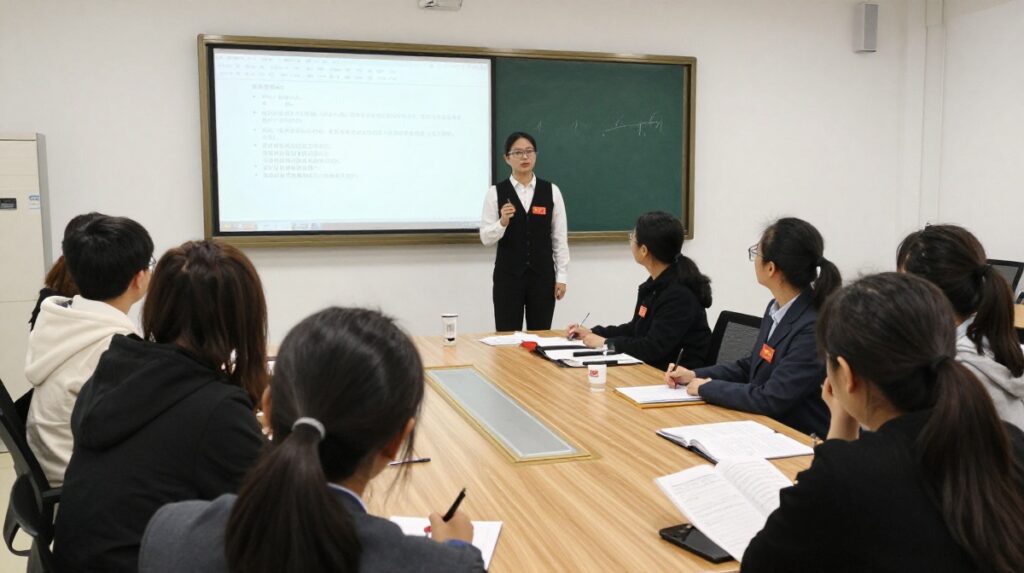
Approximately one in three UK organisations is now prioritising upskilling existing employees rather than defaulting to replacement hiring. This shift reflects both cost pressure and the recognition that ‘ready-made’ talent is simply not available at scale in several key specialisms. Investing in structured development programmes, particularly around AI literacy, data skills, and technical capability, converts the existing workforce into the future workforce, builds retention by signalling investment in people’s careers, and reduces dependency on an external market that is increasingly difficult to hire from.
The organisations doing this most effectively are those that combine technical upskilling with investment in the underlying capabilities, critical thinking, adaptability, communication, and collaboration that determine whether someone can apply new technical skills in real-world settings. Technical training alone, without the deeper capability foundation, tends to produce narrow and brittle uplift. The organisations building genuine capability are thinking about how work is designed, not just which tools people are trained to use.
Conclusion
The UK skills gap will not resolve itself. The structural factors driving it, demographic change, the pace of technological evolution, and the mismatch between educational pipelines and employer needs are not temporary. They are the permanent context in which UK businesses will hire for the foreseeable future. Businesses that treat this as a cyclical problem to wait out will fall further behind. Those that treat it as a structural reality requiring a deliberate strategy will find they can still recruit effectively, because the talent does exist, but it requires broader thinking about where to look, how to assess it, and how to develop it once it is inside the organisation.
The businesses winning the UK hiring market in 2026 share certain characteristics: they have moved toward skills-based assessment, they are open to international and non-traditional candidate pools, they offer genuine flexibility, and they invest in developing the people they have. None of these strategies is complex in principle. All of them require deliberate execution and the organisations that get the execution right are the ones consistently filling roles that their competitors cannot.
Struggling to find the skilled talent your UK business needs? Sea-Faj Consult UK helps employers close the gap through skills-based recruitment, international talent pipelines, and workforce outsourcing tailored to your business. Contact uk.sea-fajconsult.com to speak with a specialist.
Frequently Asked Questions
1. What is causing the UK skills gap in 2026?
A combination of factors: an ageing workforce retiring from technical trades, the rapid evolution of digital and AI skill requirements that educational pipelines have not kept pace with, and a structural mismatch between the qualifications most candidates hold and the competencies employers increasingly need. It is not a shortage of workers, it is a shortage of workers with the right skills for today’s roles.
2. Which UK sectors are most affected by skills shortages?
Technology and digital services (cybersecurity, software engineering, data science, AI literacy), construction and engineering (skilled trades, project delivery), healthcare, and renewable energy are all experiencing the most acute shortages in 2026. These are sectors where demand is growing at the same time as domestic supply is structurally constrained.
3. What is skills-based hiring and does it work?
Skills-based hiring evaluates candidates against specific, demonstrable competencies rather than credentials or job titles. It works because it widens the effective talent pool, capturing capable candidates who would be filtered out by a traditional credentials-first approach and it produces better predictions of actual on-the-job performance than CVs and unstructured interviews alone.
4. Can international recruitment help UK businesses close the skills gap?
Yes, for sectors where domestic supply is structurally insufficient, international recruitment is a practical and proven strategy. The UK’s Skilled Worker visa route provides a legal, structured pathway for employers with a sponsor licence to hire from global talent markets. For businesses in construction, technology, healthcare, and other shortage sectors, international pipelines are increasingly part of a mainstream workforce strategy rather than a fallback option.
5. How long does it take to fill a specialist role in the UK in 2026?
The average time to hire across all roles is currently around eight weeks, but specialist and senior roles regularly take three months or more. Skills shortages in technical areas extend timelines further, particularly where the candidate pool for a specific combination of skills is narrow. Employers who invest in proactive talent pipelines, rather than reactive vacancy-by-vacancy hiring consistently achieve faster time-to-hire in constrained markets.