
In 2026, talent acquisition has become more than just recruitment for UK companies; it is now a strategic business function directly tied to growth, cost control, and global competitiveness. As hiring demands increase and local talent shortages persist, many UK employers are actively expanding their search beyond borders, with Nigeria emerging as one of the most reliable talent sources.
The shift is not accidental. It is driven by urgency. UK companies are under pressure to fill skilled roles faster, reduce hiring costs, and maintain productivity in an increasingly remote and digital-first economy. Nigerian professionals, particularly in tech, administration, finance, customer support, and creative industries, are now being integrated into global workforce pipelines at a much faster rate than in previous years.
Why Nigerian Talent Is Becoming a Strategic Advantage
We’ve seen a consistent pattern across recruitment operations: UK employers are no longer just “outsourcing work”; they are actively building hybrid teams that include Nigerian professionals as long-term contributors.
Several factors are driving this shift:
- Strong English proficiency and communication skills
- High adaptability to remote work environments
- Competitive technical and professional skill levels
- Lower hiring and operational costs compared to local UK recruitment
However, the real advantage is not just cost; it is scalability. Companies can now expand teams without the traditional constraints of office space, relocation costs, or lengthy onboarding cycles.
What Talent Acquisition Looks Like in 2026

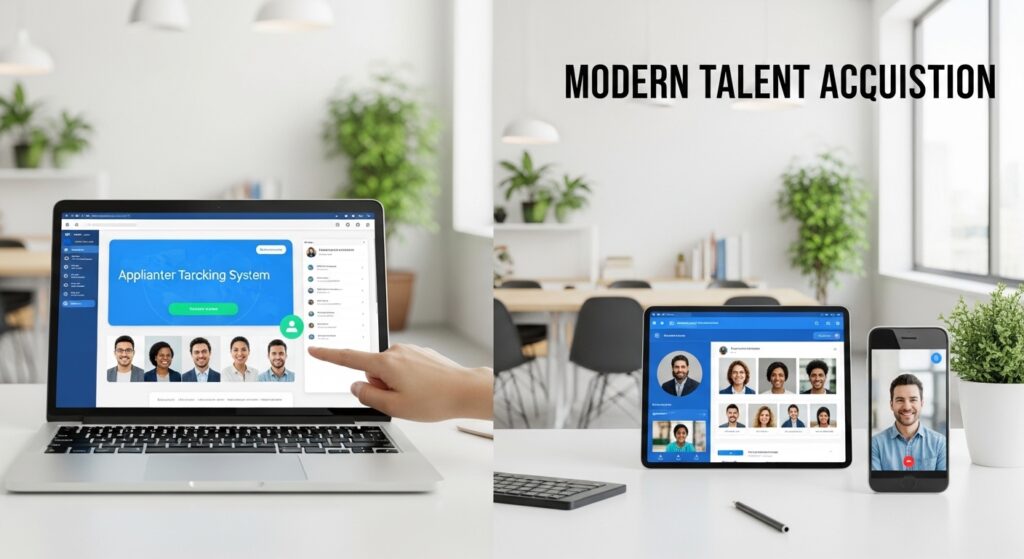
Modern talent acquisition is significantly different from traditional recruitment. Instead of manually sorting CVs and relying on job boards, UK companies are now using structured systems that combine automation, data, and outsourcing partnerships.
A typical 2026 talent acquisition model includes:
- AI-driven candidate sourcing tools
- Pre-vetted international talent pools
- Skills-first assessment frameworks
- Remote onboarding systems
From a consultancy perspective, one of the most notable changes is the shift from “hire and hope” to “screen and deploy”. Employers now want candidates who are already filtered, tested, and ready to integrate into teams with minimal delay.
This is where many companies struggle. Without structured talent pipelines, hiring delays stretch from weeks into months, especially when dealing with international candidates.
Traditional Recruitment vs Modern Talent Acquisition

To understand the shift clearly, consider this comparison:
Traditional Recruitment:
- Manual CV screening
- Local talent dependency
- Average hiring time: 4 to 8 weeks
- Higher cost per hire
Modern Talent Acquisition:
- Automated sourcing and filtering
- Global talent access (including Nigeria)
- Average hiring time: 5 to 14 days
- Lower cost per hire with scalable output
The difference is not incremental; it is structural. Companies that fail to adopt modern acquisition systems are already experiencing competitive disadvantages in speed and workforce flexibility.
How UK Companies Are Accelerating Nigerian Hiring
One of the most effective changes in 2026 is the use of structured external partners who specialise in African talent sourcing. Instead of handling everything internally, UK companies now rely on curated pipelines that deliver pre-qualified candidates.
In practice, this includes:
- Pre-screened talent pools from Nigeria
- Role-specific assessments before shortlisting
- Fast-track interview coordination across time zones
We’ve seen companies reduce hiring timelines by over 60% simply by restructuring their acquisition approach.
However, challenges still exist. Skill mismatch, inconsistent CV standards, and onboarding delays remain common barriers when systems are not properly aligned.
This is where structured recruitment support becomes critical. Organisations like Sea-FAJ Consults increasingly support companies by bridging the gap between UK hiring expectations and Nigerian talent readiness, ensuring that candidates are not just available but actually deployable.
Key Hiring Challenges UK Companies Still Face When Hiring Nigerian Talent
Even with improved talent acquisition systems, UK employers still encounter friction points when scaling hiring across Nigeria. The reality is that access to talent has improved, but readiness of systems and alignment of expectations often lag behind.
From a consultancy perspective, these are the most recurring issues:
1. CV Inflation and Skill Misrepresentation

A major problem is inconsistency in CV quality. Many candidates overstate competencies or fail to structure their experience in a way that reflects actual capability.
What we consistently observe:
- CVs listing tools without practical experience
- Generic job descriptions with no measurable outcomes
- Lack of portfolio evidence for technical roles
This leads to longer screening cycles and higher rejection rates, even when talent is available.
2. Slow Verification and Hiring Bottlenecks

UK companies often underestimate the time required to properly verify international candidates.
Delays typically occur due to:
- Reference verification across time zones
- Portfolio or certification validation
- Communication gaps during interview scheduling
Without structured systems, a 7-day hiring target easily expands to 3-4 weeks.
3. Remote Onboarding Gaps

Hiring is no longer the end of the process; onboarding determines retention.
We’ve seen cases where:
- Candidates are hired quickly but lack onboarding structure
- Role expectations are not clearly communicated
- Remote work tools are not standardized
The result is early-stage disengagement and avoidable turnover.
Best Practices for Faster Talent Acquisition in 2026

UK companies that are successfully hiring Nigerian professionals faster are not simply “trying harder”; they are redesigning their acquisition architecture.
Below are the most effective practices currently driving results:
1. Shift to Skills-Based Hiring Models
Instead of focusing on CVs, companies are prioritising the following:
- Practical assessments
- Work simulations
- Portfolio reviews
This reduces hiring risk and improves accuracy in selection.
2. Build Structured Job Descriptions
Poor job descriptions are one of the biggest hidden causes of hiring delays.
Effective ones include:
- Clear deliverables (not just responsibilities)
- Required tools and measurable skills
- Defined success metrics for the role

3. Use Pre-Vetted Talent Pipelines
Companies are increasingly working with recruitment partners who provide:
- Pre-screened Nigerian professionals
- Role-specific matching
- Technical and communication assessments before interviews
This alone reduces hiring time by up to 50–70%.
4. Strengthen Remote Onboarding Systems
Fast hiring without structured onboarding creates instability.
Best-performing companies now include:
- 3-to-7-day structured onboarding plans
- Digital workspace orientation (Slack, Notion, Trello, etc.)
- Clear performance expectations within the first 30 days
How Sea-FAJ Consults Supports Talent Acquisition for UK Companies

In 2026, recruitment is no longer just about filling roles; it is about building reliable, scalable talent systems.
Sea-FAJ Consults supports UK organisations by optimising their talent acquisition pipelines through:
- Access to verified Nigerian professionals across multiple industries
- Structured pre-screening and skills validation
- Faster shortlisting and interview coordination
- Outsourced recruitment process support for SMEs and growing firms
Instead of spending weeks filtering unqualified applications, companies gain direct access to job-ready professionals who meet role expectations from the start.
This approach is especially effective for:
- Remote administrative roles
- Customer support teams
- Tech and digital professionals
- Outsourced business functions
The outcome is simple: faster hiring, lower cost per hire and higher retention quality.
Conclusion
The evolution of talent acquisition in 2026 is reshaping how UK companies build their workforce. Nigeria has become a critical talent hub, not because of affordability alone, but because of the increasing quality, adaptability, and scalability of its workforce.
However, speed in hiring does not come from access alone; it comes from structure. Companies that combine modern acquisition systems, skills-based hiring, and strategic outsourcing partnerships are consistently outperforming those relying on traditional recruitment models.
For UK employers, the opportunity is clear:
Build smarter acquisition systems or continue losing time in outdated hiring cycles.
With the right structure and partners, hiring skilled Nigerian talent can move from weeks to days without compromising quality.
FAQs
1. Why are UK companies focusing on Nigerian talent in 2026?
Because Nigeria offers a strong pool of skilled, English-speaking professionals who are adaptable to remote work and cost-efficient for global teams.
2. What is the biggest advantage of modern talent acquisition?
Speed and precision. Companies can hire faster using structured pipelines, AI tools, and pre-vetted candidates.
3. How long does hiring take with modern talent acquisition systems?
Typically 5 to 14 days when using structured sourcing and pre-screened talent pools.
4. What challenges do UK companies face when hiring internationally?
Common issues include CV inconsistency, verification delays, and weak onboarding systems.
5. How does outsourcing improve talent acquisition?
Outsourcing provides access to ready-made talent pipelines, reduces screening time, and improves hiring accuracy.